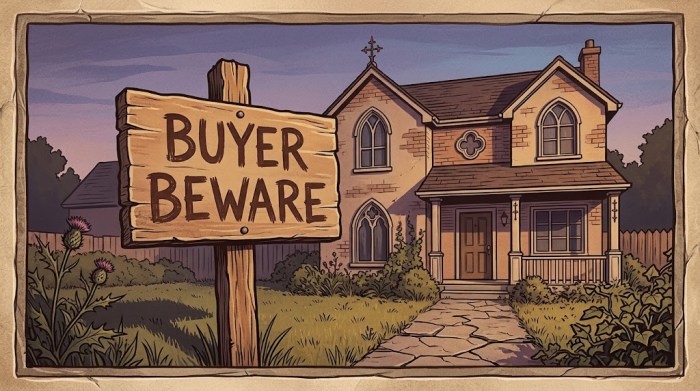
One of the things we need to be ever watchful for, especially in this current day with so much commerce going on through the internet. There are so many products that imitate each other, even looking almost like each other, that it is hard to tell them apart. The danger here is that when you find a product that you want to buy, like a vitamin, health supplement, or some tool or device that will help you repair, or simply live better, there is always someone offering a similar, ever cheaper version that, when you get it, you realize it is not what you wanted. It’s counterfeit! Perhaps it looks like what you originally wanted, but it is a less powerful, less effective, or weaker product. This can be very frustrating, and we can spend needless time and money sorting through the advertisements until we get to the real thing.
We need to beware of the same problem when searching for house churches, or simple churches. There are many types to choose from. Most who start house churches do so for a variety of reasons. Most are not concerned about meeting together in the way God designed us to meet in the current age, but may have other intentions or may simply imitate what they have heard or seen others do. Likewise, because people and cultures vary, there may be various customs, but the general design should be similar and have certain characteristics.
So, not all that glitters is gold, as the old saying goes. Therefore, let’s look at what a sound, biblical simple church should look like, then look at some imitations that you may inevitably come across.
The Design
The New Testament design is no accident. It wasn’t some ad hoc or makeshift assembly idea that was done in a rush or for lack of know-how. The New Testament assembly was a result of God’s plan falling into place.
Jesus as Head
The first trait of a simple church is that Jesus is the recognized Head. It is not presided over by a formal leader. The only leadership given in the New Testament are elders, and there should be more than one. There are no formal leadership offices in the New Testament churches, for the original Greek language does not indicate any of these roles as formal. The purpose of the elders is not to run the meeting, but to watch over and step in if there is a conflict. They may also participate in the same manner as anyone else. Likewise, they are to be example setters, not lording their authority over the other believers (1 Peter 5:1).
Autonomous
The second trait that a simple Church should have is independence. They should not be affiliated with a denomination or tied to a formal organization. Each church should be independent so that they can submit to the leadership of the Lord Jesus and He can address their needs as part of His body. All churches belong to the Body of Christ. Paul said it well in his letter to the Ephesians 4:4, “There is one body and one Spirit, just as you were called to one hope when you were called; one Lord, one faith, one baptism. . .” The modern denominational system allowed for various allegiances that did not emphasize this principle that Paul here articulated. The context of it is the coming together of the Jews and Gentiles under Christ as one body of believers and shows the importance of not differentiating.
Paul also addressed the issue that the Corinthian church had in the first part of his first letter to them. For according to what he had heard, quarrels were rising up among them because some said, “’ I follow Paul’; another says, ‘I follow Apollos’; another, ‘I follow Peter’, while still another says, ‘I follow Messiah!’ Has the Messiah been split in pieces? Was it Paul who was crucified for you? Were you baptized in the name of Paul?” (1 Corinthians 1:12-13). These were all contemporary leaders to the recipients of these letters, and Paul made it clear that there was not to be any such divisions. If we can learn anything from the denominational system of the past five hundred years, we must learn how easy it is for division to creep in. Our allegiance is to Christ and all churches are one body under him, whom we answer to directly.
Priesthood of All Believers
Thirdly, the priesthood of all believers should be recognized and practiced. Paul says that the body “builds itself up in love, as each part does its work” (Ephesians 4:16). He describes more about how this should look in 1 Corinthians 12-14. The assembly responds to the Holy Spirit through the gifts that He distributes, while all others discern what is said to be sure it is coming from God. Because today we have the New Testament canon, we include this as a way to determine if what is spoken is true and sound. God speaks through each of us to each of us. If this is not allowed to happen, then the biblical design of the Kingdom assembly is not being followed. In Paul’s statement, the “builds itself up in love” is the Holy Spirit speaking through people to others in the assembly. “As each part does its work” refers to the manifold use of gifts among those in the assembly as each person uses their Holy Spirit given gift to edify other members.
There is no place for a clergy of ordained leaders who alone speak to the assembly and give direction and teaching as in the Old Testament. Now, everyone can be an equal participant as long as they truly have the Holy Spirit and utilize their given gift.
Authority of Scripture
Fourthly, the Bible should be considered inspired and authoritative, as Paul speaks of in his letter to Timothy,
“All scripture is God-breathed and is valuable for teaching the truth, convicting of sin, correcting faults and training in right living” (2 Timothy 3:16).
The scriptures are a holy record of the truths God has given to us throughout the past three thousand years or so. They have never been disproved. Many choose not to believe them, but everyone who has set out to disprove them has not been able to do so, and on the contrary, often become convinced of their truth even more and find themselves converts. As Paul states, these scriptures are “God-breathed.” If God inspired them, and they have endured scrutiny and testing this long, they must be believed and trusted.
Orthodoxy
Fifth, the group should align with orthodox beliefs about the Father, the Son, and the Holy Spirit as put forth in creeds such as the Nicene Creed. If there is any teaching that is so quickly twisted, it is the divinity of Christ or the divinity of the Holy Spirit. This was a major problem in the early church before the canonization of the New Testament. The Nicene Creed was created to counter these heresies, among others.
Orthodoxy is important because even if a group recognizes the authority of scripture, people are prone to interpret scripture in various ways and Satan can use this to cause us to stray away from the traditional orthodox beliefs that state clearly that Jesus is God and the Holy Spirit is God, along with the Father. Jesus’ divinity is crucial to the salvation of humanity. Anyone can die, but Christ is the perfect sacrifice (Hebrews 2:17, 10:12). And that Jesus died and rose again three days later and His death is a sufficient sacrifice for the redemption of humanity. Paul, likewise, emphasizes the importance of this when he said,
“Therefore, brethren, stand fast and hold the traditions which you were taught, whether by word or our epistle” (2 Thessalonians 2:15).
He also stated in Philippians 4:9,
“Therefore, brethren, stand fast and hold the traditions which you were taught, whether by word or our epistle.”
The traditions that Paul is speaking of are not simply religious traditions but rather traditional foundational teachings that he and the other apostles taught from the beginning that are essential to the salvation of the souls of humanity and to the true nature of the trinity.
When I first began a house church in my home, one question that arose concerned what we would tell others on what doctrines we held to in order to avoid being called heretics. We chose to use the Nicene Creed as the standard because it is the most accepted creed in churches even today. This kept us anchored in sound doctrine. We knew that distinctive doctrines would arise from the various backgrounds people had (i.e. views on eternal security, the role of the Holy Spirit, etc), and we chose to accept these differences in each other while holding to the core foundational teachings of the creed.
Beware of These
So, let’s look at some crucial characteristics that you should look out for that contradict God’s design for His assembly.
The “Small Group”
First, when a group is tied to an organization or a denomination, The leadership of those affiliations often dictate or determine what goes on during their meeting. Instead, their meetings should be directed by the Lord Jesus through the Holy Spirit. Denominations or organizations often have their own agendas set by their leaders.
For example, many traditional churches have begun to include home meetings as a way to attract more people, knowing that the more intimate setting brings people together. As people are bonded to each other, they are bonded to the sponsoring traditional church and are more likely to attend regular Sunday services. This increases the probability that they will be a financial contributor.
Often in this model the Bible lessons or studies of the small group revolve around the message of the Sunday sermon. The point to this is to keep everyone unified around the same theme. From a corporate standpoint this may seem good. But there is another assumption here that goes against the New Testament doctrine of the priesthood of all believers. It assumes that God only speaks through the pastor to the congregation and that all that is left for everyone else is to find meaning and application from it. This successfully removes Christ as the leader of the assembly and replaces Him with another mediator. According to scripture it is not a single pastor that builds up the body of Christ. Per Ephesians 4:16,
“Under His control, the whole body is being fitted and held together by the support of every joint, with each part working to fulfill its function; this is how the body grows and builds itself up in love.”
In this passage Paul just got through explaining how the gifts that Christ gave the church all work together toward the same end. Paul goes into more detail on this in 1 Corinthians 12-14. There he states that the Holy Spirit gives spiritual gifts. It is through these gifts that the Holy Spirit speaks to the assembly directly from Jesus, the Head. Nowhere in scripture do the churches assemble to discuss a sermon. The origin of the sermon during an assembly of believers wasn’t solidified as part of a church service until the second century after Christ. Justin Martyr (c. 150 AD) provides the earliest detailed snapshot of a Christian worship service in his First Apology (Chapter 67):
“And on the day called Sunday, all who live in cities or in the country gather together to one place, and the memoirs of the apostles or the writings of the prophets are read… Then, when the reader has ceased, the president verbally instructs, and exhorts to the imitation of these good things.”
In the fourth century, when Christianity was legalized under Constantine, It was very much the Roman orators, trained in the art of persuasion, that formalized this as part of the worship service. But from the beginning in the New Testament, we do not see this. There is a place for teaching, as we see Paul doing in Acts, but sermons of persuasion were meant for the unbelievers outside the assembly. Paul’s emphasis on the participation of the entire body can be seen throughout his letters.
Apostle Led
Another type of assembly to beware of is one that is built around a single apostle. These are groups that are networked together under a single apostle. This is an attempt to appear to mimic Paul and the churches he began and helped to oversee. If you hear people constantly referring to apostle so-and-so, then you realize that this assembly is built around a personality rather than Christ as its head. Most often in these cases the apostle has authority over how things are done in each assembly. Even the elders answer directly to the apostle.
In the book of Acts, we see that even Paul was subject to the Holy Spirit, for when the church in Antioch was fasting and praying, He spoke to them and said to set apart Paul and Barnabas to do work which He had for them to do. Paul and Barnabas were prayed for by the church and sent out to spread the Gospel. Notice that the word came from the Holy Spirit to the church. We don’t know who specifically spoke this word, but all realized it was from the Lord, and all, including Paul, obeyed.
In our modern world we often see people quickly grab onto titles like “apostle” or “prophet” and use it as a position of power to manipulate others. However well-intentioned it is, it usually does more for the person’s ego than for the body of Christ and stifles the pure leadership of Christ for that assembly.
Apostles and prophets are real roles, but they are not official offices. Paul describes them as “gifts” in Ephesians 4. Although they have a level of authority, they are to begin churches and teach them to rely on the leadership of Christ (Matthew 23). Paul started churches, taught them God’s ways, but he left them so that they can learn to follow Christ, not him. He spoke of himself as a parent to them, and we know parents train their children to leave the nest.
Honey, I Shrunk the Church
If you walk into a house church and there is a pulpit, a pastor, and the service is very much like a traditional church, leave as quickly as possible, or at least do not return, unless that is what you are looking for. This is the third type of simple church to beware of, and it is modeled after traditional churches with a clergy and meetings that do not allow for the participation of the entire body as the Spirit inspires. Even though it may meet in a home with a small group of people, it is not a true simple church and is not modeled after New Testament principles. God did not design the church to be led by leaders who are elevated through roles, where within the community during an assembly their words or teaching are placed higher than others. This stifles the moving of the Spirit and the leadership of Christ through the body to the body and the body is not able to “build itself up in love” as we referred to in Ephesians 4 earlier. It subdues the priesthood of all believers and elevates one person above others.
Jesus said leaders are to be servants of all. Peter said that elders are to be examples and not lords over the people (1 Peter 5:1). Beware of any leader who lifts himself up above others or allows others to do so. Elders may teach, but never to the exclusion of others using their gifts. As followers of Christ, we are to walk humbly and lift others up, not ourselves. This is the true indicator of a servant. Jesus himself said that he came not to be served, but to serve (Matt. 20:28).
Likewise, in John 13 he washes his disciples’ feet, the ultimate servant act in his day. He said that if He, as Lord, washed their feet, they should wash each other’s, following His example, and those who do will be blessed in doing so. Jesus was not saying that we need to have foot washing services. Washing each other’s feet is not a common need today. Most everyone has access to clean water to bathe regularly. In Jesus ‘day, however, walking from one place to another on dusty roads meant dirty feet. Jesus was simply advocating for us to put the needs of others ahead of our own and that no act of service is to be too low or beyond us. Serving others is the ultimate form of self-denial and humility, unless it is done for the praise of others.
True servants serve whether recognized or not. In fact, most true servants get very little or no recognition for what they do. So often people who have not died to themselves, as Christ commands us to do, see the simple church as an opportunity to be seen as important, elevating themselves in leader roles. Even if they are sound in their teaching and beliefs, they have not matured to the point of dying to themselves. Paul says that we ought to follow Jesus’ example, to have the same attitude that Jesus did, that
Though he was in the form of God, he did not regard equality with God something to be possessed by force. On the contrary, he emptied himself, in that he took the form of a slave by becoming like human beings are. And when he appeared as a human being, he humbled himself still more by becoming obedient to death–death on a cross. Phil, 2:5-8.
The apostle John, in his third letter, mentions a man named Diotrophes who “loves to put himself first among them” (v. 9). Evidently, he wanted to be even more important than John who most likely founded the church. John’s authority came from his direct discipleship with the Lord Jesus, so he spoke firsthand knowledge of Jesus’ teaching. Perhaps Diotrophes was threatened by this and wanted to be seen as the important one. We don’t have much information or context here but given all that we know of the teachings of Jesus, Paul, and John, we know that to seek to be first above others is the opposite of what they taught. Throughout the New Testament we are exhorted to humble ourselves. God is the only one to do the exalting and He will do so in His timing and in His way (James 4:7). We are to simply obey.
Conclusion
Simple churches, or home churches, are becoming more popular and less uncommon than it once was. It seems that the trend will continue, populating the landscape with gathering places for the followers of Jesus in everyday homes and spaces instead of special buildings. Just like we had to be aware of what type of traditional church we were attending, we need to do likewise in our search for a home fellowship. Not all fellowships have God’s design in mind. And too often there is a human agenda, however well-intentioned, rather than God’s.
We learned that by God’s design a gathering should have Jesus as its head, be autonomous and unattached to organizations and denominations, should recognize the priesthood of all believers as a practice, allowing the Holy Spirit to work through every believer present to edify the body of believers, should submit to the authority of the holy scriptures, and should hold to the orthodox traditional beliefs. If these are not present in a local fellowship, find one where they are. Perhaps there are a limited number of simple or home fellowships where you are and they Lord may lead you to begin one. In that case you can be sure to follow the design that the Lord has put forth in His Word.
We must beware of fellowships that do not follow God’s design, because God may not be truly leading them. Let’s be part of recapturing God’s design for his church and allow the Lord Jesus as its Head to build his church so that the gates of hell will not prevail against it (Matthew 16:18)!
Categories: Ekklesia Community


Leave a Reply