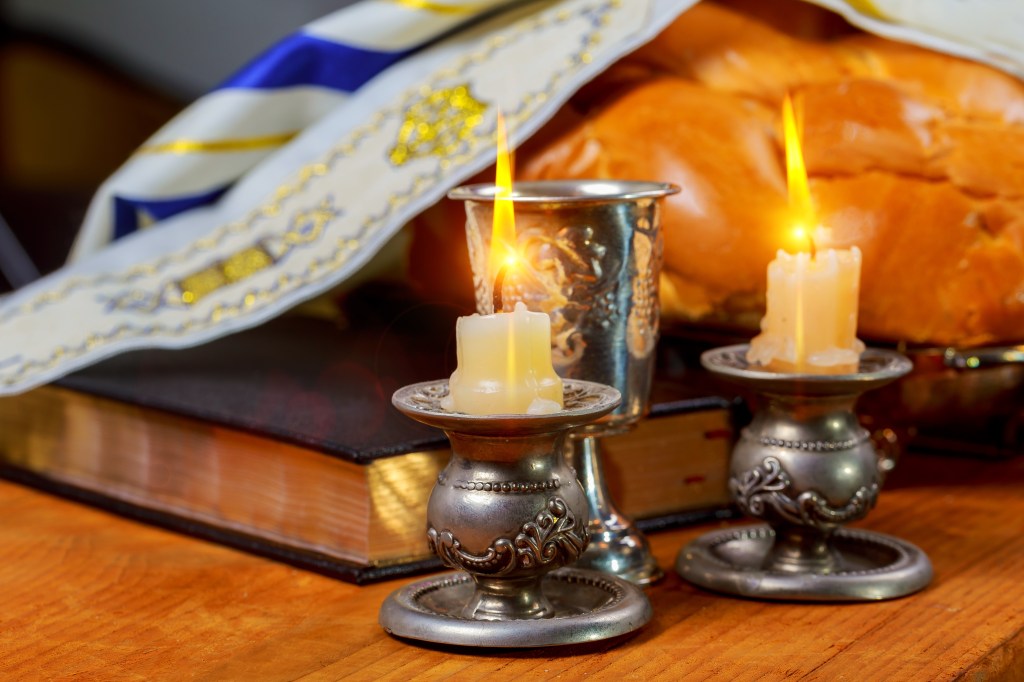
Introduction
The observance of the Sabbath, who should observe and when and even how, has been a topic of discussion for thousands of years. It’s not a surprise that this topic has surfaced again in our current age. The Jews do not need to debate the issue, since they received a direct command from the Lord at Mt. Sinai to observe the Sabbath on the last day of the week. But ever since the coming of Jesus the Messiah and the conversion of Gentiles as His followers, there have been those who insist that the observance of the Sabbath, and even other Jewish traditions, apply to us as well. The apostle Paul spent a lot of time discussing this issue because it had arisen in his day. Still the question comes up, seemingly with each era or generation as to whether God requires everyone, including Gentile followers, to observe the Sabbath.
As I was going to work one day, I heard a sermon on the radio by a preacher, not so unknown, and not to be named here, about the Sabbath. He may have been teaching through the Ten Commandments, and his focus that day was on the fourth one. His main message seemed to be that it was good for us to take time to rest, and that, from his perspective, seemed to be the main reason that this command existed. I was quite disappointed at his lack of insight and research into a subject that far transcends the fourth commandment. Unfortunately, that is as far as most Christian teaching goes on the topic.
I have been fascinated with the idea of the Sabbath for years, and have dabbled here and there in some readings, both Jewish and Christian, that shed some light on the vastness of this topic. As I began to study it more deeply, I discovered that it is much bigger than I am able to discuss here. There is much about this concept that transcends a surface reading of the Bible. But if you are a consistent Bible reader, you quickly get a sense that there is more to this than meets the eye. So much so that it deserves a whole other writing to do justice to so much of the application that can be given to it. I was a bit overwhelmed by the depth of it all, but I will keep the focus here on answering the question presented in the title. Background information will be presented to support the findings that will help underscore the answer to this critical question. We will follow the Sabbath as it unfolds in the Old and New Testaments to see how the concept develops into a grand finale. Think of it as one of those children’s story books that you may have read when you were growing up that, when you get to the last page, opens up into a big pull out or pop-up to help you visualize some key part of the story. The Bible actually does that with words, but we are not always aware of it because our non-Jewish approach to the scriptures for so long has obscured some critical motifs that the serious Jew would take for granted. And, modern day slice and dice methods of Bible reading have hidden the flow and overall theme of the scriptures. I hope that in this writing we can unearth some valuable treasures that serve to connect this ancient practice to the culmination of a grand divine plan for whosoever will come to follow the Creator of all things.
A Birds Eye View
First, keep in mind that the Bible is not just a bunch of laws, but it is also what we would call a “metanarrative.” It is the big picture account of God’s plan unfolding through the ages and completes with God dwelling with His people, which is what he started out doing in the Garden. History is simply the day to day account of God’s restoring this perfect communion between Himself and his people. We must understand where we are in the narrative. That is important, because God is working out His plan, and we are at a different point now than the Jews were in the days of Moses.
The Bible begins at the creation of all things by God, including His creation of humanity. In the Garden of Eden, God dwelt with Adam and Eve without restrictions. They spoke with Him and spent time with Him regularly. The text implies that they met with him in the cool of each evening. We don’t know how long this went on, but we do know that it ceased when Adam and Eve chose to disobey a specific command given by God. It was this simple act that tore the relationship between the humans and their Creator. As a result, humanity could no longer walk and talk with God as they had before. They were banished from his presence, sentenced to an eventual death, and endured a curse on the creation that made life considerably harder than it was before. But God was determined to restore that relationship because He wanted to live in the midst of his creation with humanity whom he loves. The remainder of the Bible is the story of how that plan progresses until one day God will dwell in the midst of His creation with a people that He can call His own, with whom He can walk and talk unhindered as He had in the beginning. Although we have not reached that glorious age yet, we are much closer to it than when the events of the Old Testament took place, and not just that more time has passed, but that we have a greater glimpse and a deeper understanding as a result of some significant events that God has brought about.
In the Beginning
We are first introduced to the idea of the Sabbath in Genesis at the beginning of chapter 2:
“So the creation of the heavens and the earth and everything in them was completed. On the seventh day God had finished his work of creation, so he rested from all his work. And God blessed the seventh day and declared it holy, because it was the day when he rested from all his work of creation.”
Now, please bear with me as I get a bit technical on the Hebrew. In each case where the word “rest” is used in the above verse, the actual Hebrew word, שְׁבֹּת, is “shabbat,” the word for Sabbath. English has no comparable word, so we simply bring it over from the Hebrew. The term shabbat simply means to “cease.” The essence of the word in this context is that God’s work of creation is done, and he has ceased, or desisted, from his work. It does not mean that he rested, though many modern English translations render it thus. F.F. Bruce says that, “In the context rested is inappropriate, for it implies effort that is not otherwise suggested.” 1 The Jewish English Tanakh, however, simply says God “ceased . . . from all the work He had done.”2 There is an implied rest, however, because the word rest has the connotation of stopping something, or taking a break. The modern day picture, though, of this term is that God sat in his favorite lounge chair, put up his feet, and perhaps took a nap after doing all that hard work. The Hebrew word that is used for rest of this kind is נוחה, “nuach.” The connotation of that word is a rest where someone is settling in. We will come back to this a bit later.
Worth noting here is that, unlike every other day of creation, there is no evening and morning identifying the seventh day. Why is that so? Because the Sabbath was something that continued. In the above verse, it says that God “blessed the seventh day.” As moderns, we may miss the significance of it, or worse, make it into something it wasn’t meant to be. But think of it in its context. God had created the earth, and it was completed in seven days, and it was complete in that it was good, or perfect. Interestingly, in Hebrew, the word for seven, shevah, shares the same three Hebrew consonants as the word for complete. In the original Hebrew, the two words are spelled the same, but pronounced only slightly different. In this perfect state in the Garden of Eden, God dwelt in the midst of His creation unhindered. Adam and Eve walked and talked with him. This was a “blessed” state.
As we shall see, this is significant. Up to this point, we don’t see the Lord giving the observance of the Sabbath as a command, because there is no need to. Creation is existing in a Sabbath state, a paradise of blessing, where God and His creation cohabit in perfect harmony. Life is good. This all changes, however, when Adam and Eve take from the Tree of the Knowledge of Good and Evil in disobedience to God’s command, and curses are pronounced on creation:
“Cursed is the ground because of you;
With hard labor you shall eat from it
All the days of your life.
Both thorns and thistles it shall grow for you;
Yet you shall eat the plants of the field;
By the sweat of your face
You shall eat bread,
Until you return to the ground,
Because from it you were taken;
For you are dust,
And to dust you shall return.” (Genesis 3: 17b-19)
The blessed state of being is over. Paradise is lost. Death is introduced into the story for the first time. Up to then it was all about life, new life, blessed life. Intended immortality is assumed for Adam and Eve because the penalty of death was only issued after their disobedience. As they are banished from the Garden, a cherubim with a flaming sword is charged with guarding the entrance to Eden, for in their current state, humanity cannot enter that blessed state.
Noah to Abraham
As we journey through the events in Genesis, we quickly see how the world has gone awry. Things deteriorate rather quickly, though we do not know how much time has actually passed. But we see how evil seems to reach a crescendo, at which point the Lord says that He regrets that “He made man on earth, and His heart was saddened” (Genesis 6:6). And he determines that He will blot all of mankind from the face of the earth. But God knew of one man, Noah, who found favor with Him. It is interesting that Noah’s name is very close to the Hebrew word for rest, nuach, which we spoke of earlier.
In Genesis 6 we see Noah being called of God to build an ark because He plans to send a flood to destroy all of life on earth. Noah believes God and builds the ark. The flood that follows acts to cleanse the polluted earth (almost a type of baptism), and Noah and his family are saved from destruction. In essence, the world is given a rest from the evil that had so polluted it prior to the flood. A new day has begun. A new opportunity has arisen for all of humanity, though with much greater restrictions in length of life and the state of creation, as the effects of the curse deepen. But God enters a covenant with Noah in that He promises to never destroy the earth with a flood again, and puts a sign in the sky that, even today, stands as a reminder. And although a type of rest has been granted, the blessed state of the Shabbat was far from being realized.
A few generations later, in Genesis 12, we see God look for another man. Remember, God started with one man, Adam, with whom He could commune and fellowship with. He called one man, Noah, to bring rest to the corrupted land. And now, again, in all the earth, God found another man He could trust, called Abram, and he called him from his distant country home to a land that God would show him. God promises him at that time that He will make him into a great nation. Abram believed God and left his homeland for the new land that God promised Him. Upon his arrival, God took him through the land and told him that it was his, for his descendants. The childless couple, now in their old age, are told again that they will have a son, and that their descendants will be as the stars of the sky. Abram believes God, and the scripture says, “it is credited to him as righteousness.” He then cuts a covenant with him, telling him to cut in half a heifer, a she goat, a ram, and a turtle dove. Abram then sees the flaming torch of God go between the halves of the animals, sealing the covenant. And shortly thereafter, God welcomes Abram, and Sarai his wife, into His family by taking letters from His own name, and giving them to Abram and Sarai as new names, Abraham and Sarah. It was the simple trust of Abraham that caused the Lord God to call him with His own name. But notice, there is no mention of a seventh day observance. In fact, the only additional covenantal requirement that was given to Abraham was that he and every male member of his family were to be circumcised. This, however, did not occur at first, but only after he had been with his servant Hagar and had a child by her. Abraham attempted to fulfill God’s promise in the only way he knew, and not by trusting God’s way. God did not break His covenant with Abraham, but gave him, and every generation of males since, a reminder that when we don’t trust God, bad consequences result. In this case, Hagar and her son suffered greatly at the hands of Sarah, and was eventually ousted from the homestead completely. In a sense, through circumcision, God cut a new covenantal sign with Abraham that would last throughout the generations. A reminder that the male part of the body that was created to give life, can also be used incorrectly and bring pain and destruction when we stray from God’s way. Still, no seventh day observance is called for, though God considered Abraham to be righteous because he believed the Word of the Lord.
Abraham to Moses
Abraham’s son Isaac is the child of promise that God gave to Abraham, through whom he would become the father to many nations. It is important to remember that phrase, “father to many nations,” because as we shall see, it is a critical part of God’s unfolding plan. Isaac then goes on to father Jacob and Esau, but it is Jacob, the younger, through whom the promise would continue. Jacob covenants with God (Genesis 35:9-15), and he returns to the land that was promised to his fathers. But he is no longer Jacob (“deceiver”), but Israel (“wrestles with God.”).
Israel has twelve sons, and like typical families, these sons argue frequently and have their differences. They resent and compete with one another. They become particularly resentful against Joseph, who was the second to the youngest. Israel seemed to favor him because he was the first born to his wife Rachel, whom he loved greatly. She had passed while giving birth to her youngest, Benjamin. But for some reason, Joseph warranted some extra attention from his father. His father gives him an elaborate coat, and the other brothers become jealous of him, and finding an opportunity to do away with him, they plot to sell him as a slave to some gypsies, who in turn sell him to an Egyptian. But, as we often fail to see, God uses bad things for our good and His glory, and even these terrible acts of his brothers set the stage for their own rescue. God’s favor raises Joseph to be second in command in Egypt. When a seven year famine hits Egypt and the land where Israel was living, it was the wisdom of God in Joseph that saves not only Egypt, but Israel and his brothers from certain death. Israel and all his family are forced to move away to Egypt, where they settled and grew vastly in number.
Moses to Sinai
Fast forward over five hundred years. The people of Israel still maintain their identity as a people, but their sheer numbers threaten the security of the Egyptians. And as is often the case, history is forgotten, and the kings of Egypt no longer remember how this people group came to be in their midst. So, they made them slaves, forcing them into hard labor. The Bible says, however, that “God remembered” his promise to Abraham. It may have seemed at the time that God had forgot and then suddenly remembered again, but that would be out of character for God. He waits for the right and perfect time. God raises up a deliverer, Moses, to lead them out of Egypt with a goal of having their own land where they can live unfettered and unhindered, a land promised to Abraham centuries before. We know the story, how God brought them out of their slavery with a mighty hand of deliverance, and led them through the Red Sea (again a type of baptism,1 Corinthians 10:2), and brought them into the promised land, the land promised to their ancestor Abraham by God.
Before the children of Israel came to Mount Sinai, the Lord began to provide daily food for them. He told them in Exodus 16:4 that He would rain down bread from heaven each day. This bread would appear like the dew each morning on the ground, and they were to gather enough for the entire day. However, on the last day of the week, no bread would appear, because this would be a Sabbath to the Lord. The bread would cease for one day. The people were instructed to gather twice as much on the sixth day and it would keep till the end of the seventh day of the week. On every other day, whatever was left over at the end of the day would not keep until the next day, but would spoil, or become infested with worms. The Israelites had to trust God for each day’s food. In Egypt, they had to work each day for that day’s food, but here the Lord would provide it for them. But on the seventh day, they had to trust that the Lord would provide twice as much on the sixth day, and that it would not spoil on the seventh day. Exodus 16 records that some folks still went out on the seventh day to gather bread. The Lord got quite upset with them, because by going out to gather bread on the seventh day after being told not to was a sign of not trusting God. How often we trivialize our own lack of trust in God in our daily lives. Somehow I don’t think that God does. Here the Sabbath is beginning to be observed before the ten commandments are even given. Again, God commanded it directly through Moses to the people of Israel.
Shortly thereafter, the people of Israel reach Mount Sinai, the mountain where God had first met with Moses to call him to the task of leading His people out of Egypt. It was there that God entered into a covenant with the whole people of Israel. This time God appears as fire on the mountaintop, and calls Moses to come up so that He may speak with Him. It was there that God wrote down the terms of the covenant. It was written on two tablets of stone, and today we call these the Ten Commandments. What we must keep front and center here is that God is creating and building a nation. What does a nation need? It needs direction, laws, and government in order to function. That is what is going on in the next several books, as God is laying out a very detailed account of instructions (Torah) that will guide His people in how they are to live each day in relation to Him and to one another. God was to be their supreme leader or ruler. God declared that the nation that He was founding would be a “Kingdom of priests and a holy nation” (Exodus 19:6). The first key word in that phrase is “Kingdom.” They were to be governed by God alone. They had no other king appointed to them. There was no legislative body or head minister. Moses was their current leader, but no provision was made in the instructions for a supreme leader that would replace him when he was gone. In essence, this was the beginning of the reformation of the Kingdom of God. It began in the Garden of Eden, but mutiny and rebellion against God’s authority ensued, and the people, though only two at that time, were dispersed. Furthermore, they were to be “priests,” a whole Kingdom, or nation, of them. Today, we see the role of a priest as a professional position that does rituals and hears confessions. But the biblical priest is simply a person who is a go between, a form of representative, who represents God to those who do not know him, and who represents the people, and their needs, to God. This may create a question in your mind as to what would be the purpose of a whole Kingdom of priests? Remember, God’s purpose ever since the fall in the Garden is to restore that unhindered relationship with humanity. Israel would serve as an entire Kingdom of priests that would make God known to the nations of the world, so they would come to know the Creator of all things. In addition, Israel was to be a “holy nation.” The term holy, today, has come to mean without sin. Although this is part of the meaning, to be holy is actually to be set apart for God’s purpose. We’ve already discussed that God’s purpose was to be restored to his Creation, particularly humanity. This purpose He pursues relentlessly. Therefore, Israel was to be a nation set apart to make God known to the godless, or idol worshiping, nations of the world by being God’s representative to the nations, and representing the needs of the nations to God. And the way they lived toward God and one another in justice and love would reflect the nature of God as they did this. In fact, the third commandment is highly indicative of this. For it says, “You shall not take the name of the LORD your God in vain, for the LORD will not leave him unpunished who takes His name in vain.” The word for “take” here is actually the Hebrew word “nasa,” which means “to bear, to carry.” Most modern day translators render this word to “take,” because they reason that a name cannot be carried but only spoken. However, Israel was to bear the name of God, they were carrying his name wherever they went. They were not to do this in vain. Carmen Joy Imes states, “At Sinai, Yahweh claims this nation as his very own and releases them to live out their calling. That calling is to bear Yahweh’s name among the nations, that is, to represent him well.”4 In fact, all of Israel’s existence was centered around the worship of God and His purpose. Likewise, today, we are to “bear” His name. We do so as we go, and are to reflect Him and His nature in all we do. That is how we bear his name appropriately, and not in vain.
The Ten Commandments (10 words)
When God brings them to Mount Sinai, he meets with them and declares them to be a nation–His nation. Moses was called up to the top of the mountain to receive instructions from the Lord. God wrote ten instructions on stone tablets. Today we call them the “Ten Commandments,” but the Hebrew language doesn’t use the term “commandments,” but rather “words” (Hebrew,”dabarim”). These ten words formed the foundation of the remaining instructions that were to be given. Though general in nature, the next several chapters in Exodus break these out into more specific applications. The fourth commandment was,
“Remember the day, Shabbat, to set it apart for God. You have six days to labor and do all your work, but the seventh day is a Shabbat for Adonai your God. On it, you are not to do any kind of work — not you, your son or your daughter, not your male or female slave, not your livestock, and not the foreigner staying with you inside the gates to your property. For in six days, Adonai made heaven and earth, the sea and everything in them; but on the seventh day he rested. This is why Adonai blessed the day, Shabbat, and separated it for himself.” (CJB)
At this point God formalizes the observance of the seventh day as a day when all work was to cease for everyone in the household, including servants and animals and foreigners. It was a day separated unto God himself. In other words, the cares and duties of this world were to be set aside, ceased from, and attention was to be given exclusively to God. Rabbi Abraham Heschel says, “The meaning of the Sabbath is to celebrate time rather than space. Six days a week we live under the tyranny of things of space; on the Sabbath we try to become attuned to holiness in time. It is a day on which we are called upon to share in what is eternal in time, to turn from the results of creation to the mystery of creation; from the world of creation to the creation of the world.”3
The idea of Sabbath was weaved into all aspects of the Jewish culture and observances. Not only was there a Sabbath day every seventh day, but every seven years was to be a Sabbath year. During this year the land was to rest,
“For six years you may plant your fields and prune your vineyards and harvest your crops, but during the seventh year the land must have a Sabbath year of complete rest. It is the Lord’s Sabbath. Do not plant your fields or prune your vineyards during that year. And don’t store away the crops that grow on their own or gather the grapes from your unpruned vines. The land must have a year of complete rest. But you may eat whatever the land produces on its own during its Sabbath. This applies to you, your male and female servants, your hired workers, and the temporary residents who live with you. Your livestock and the wild animals in your land will also be allowed to eat what the land produces” (Leviticus 25:3-7).
The Sabbath year was a ceasing from working the ground, and allowing it to rest. It was an act of trust by the entire nation that the Lord would provide. Just like when they were in the wilderness, the Lord told them to gather food for six days, and then He would provide enough for them to gather twice as much on the sixth day, and then not to gather food on the seventh day. Here, God promised that when they arrived in the promised land, that observing these Sabbaths would ensure that the Lord would provide for them abundantly. He promised that on the sixth year there would be an abundance, enough to last through the Sabbath year. Again, this was an act of trust. He says,
“You shall therefore follow My statutes and keep My judgments so as to carry them out, so that you may live securely on the land. Then the land will yield its produce, so that you can eat your fill and live securely on it. But if you say, “What are we going to eat in the seventh year if we do not sow nor gather in our produce?” then I will so order My blessing for you in the sixth year that it will bring forth the produce for three years. When you are sowing the eighth year, you can still eat old things from the produce, eating the old until the ninth year when its produce comes in” (Leviticus 25:18-22).
In addition to the seventh year Sabbaths, they were instructed to observe the Year of Jubilee, which was to occur every fifty years,
“In addition, you must count off seven Sabbath years, seven sets of seven years, adding up to forty-nine years in all. Then on the Day of Atonement in the fiftieth year, blow the ram’s horn loud and long throughout the land. Set this year apart as holy, a time to proclaim freedom throughout the land for all who live there. It will be a jubilee year for you, when each of you may return to the land that belonged to your ancestors and return to your own clan. This fiftieth year will be a jubilee for you. During that year you must not plant your fields or store away any of the crops that grow on their own, and don’t gather the grapes from your unpruned vines. It will be a jubilee year for you, and you must keep it holy. But you may eat whatever the land produces on its own. In the Year of Jubilee each of you may return to the land that belonged to your ancestors” (Leviticus 25:8-13).
The year of Jubilee was an especially important year because it was not only a rest for the land, but it was also a time for debts to be forgiven, property to be returned to its original owners, slaves to be released. It was a time of restoration, when they would be reminded that “the land must never be sold on a permanent basis, for the land belongs to me [Yahweh]. You are only foreigners and tenant farmers working for me” (Leviticus 25:23). Houses were to be returned to their original owners (Leviticus 25:29-34). Slaves were Israelites who fell into poverty and had to work off their debt, and were to be released from that obligation in the year of Jubilee. Even for the year of Jubilee (50th year), remember it is preceded by another sabbath year (49th sabbath year), the Lord promised he would provide for them. We will come back to the significance of these observances later.
In addition to these Sabbaths, there were seven yearly festivals, or observances, that the nation was required to observe (Leviticus 23)
Passover – Pesach
Feast of Unleavened Bread
Feast of First Fruits
Feast of Weeks (Pentecost) – Shavuot
Feast of Trumpets – Rosh HaShanah
Day of Atonement – Yom Kippur
Feast of Tabernacles – Sukkot
If you read through the 23rd chapter of Leviticus, where it describes these seven feasts, be sure to count the number of times that “seven” is mentioned. Likewise, in the priestly worship in the Tabernacle, Leviticus 14 and 16, count how many “seven times” is mentioned in relation to sprinkling or anointing.
All of this was to be a continual reminder to the Israel people that the number seven is pointing to something. It is holy because it is God’s number, it is the day that He ceased from His work. But the importance of that seventh day was not just for resting from work, or to remember what God did, but to look forward to what God was going to do, something far greater, and it was to be ever present in the minds of His people. And all of this was to begin when they arrived in the promised land.
The people of Israel arrived in the promised land after forty years of wondering in the wilderness because of early disobedience and lack of trust. They came in under the leadership of Joshua, who was used of God to help them conquer the land, and then he died. But as we read on, the people struggle to follow the commandments of God and go through periods of obedience and apostasy. In addition, there is no record of the Israelites ever obeying the commands of the seventh year Sabbath or the year of Jubilee. The people of Israel fell away from his commands and worshipped idols, and as a result, the Lord sent them into exile. So, the land that was to give them rest was lost in a similar manner that the land of Eden was lost to Adam and Eve. In the book of Hebrews, the writer addresses this as he quotes Psalm 95,
“‘in my anger, I swore that they would not enter my rest.’ Watch out, brothers, so that there will not be in any one of you an evil heart lacking trust, which could lead you to apostatize from the living God!“
Remember that Adam and Eve, likewise, were sent out of the garden and into exile because of their disobedience and lack of trust. The Israelites were sentenced to 70 years in exile, which, per the prophet Jeremiah, could represent the number of seventh year Sabbaths they failed to follow, seventy times seven, or 490 years (Jeremiah 25:8-11). This time period would coincide with the beginning of Saul’s reign as king. The first deportation came around 605 B.C., and the return of the Jews to their land was about 536 B.C, or about 70 years later. The Sabbath rest was not realized in the promised land, however. As is stated in Hebrews 4:8-9, “Now if Joshua had succeeded in giving them this rest, God would not have spoken about another day of rest still to come. So there is a special rest still waiting for the people of God.”
The Messiah’s Arrival
Fast forward over five centuries and Jesus comes on the scene. The Messianic age was predicted by many prophets throughout Israel’s history, that there would be a prophet like Moses (Deut. 18:15), one who would rule not only Israel, but the nations of the world (Psalm 2; Isaiah 9:6, 7), a specially anointed one who would restore peace to the world. The prophet Daniel, in particular, speaks of a coming age when all the kingdoms of the world would be superseded by a divine Kingdom (Daniel 2:44) that would never be destroyed. Daniel lived out most of his days in exile, but toward its end, he remembered Jeremiah’s words of seventy years before his people could return to their land. It was then that Daniel sought the Lord and repented for the sins of the nation of Israel. In the midst of his prayer, “the man Gabriel” came to him that he might give Daniel understanding. He speaks of a seventy week period of time, decreed
“for your people and your holy city, to finish wrong doing, to make an end to sin, to make atonement for the guilt, to bring in everlasting righteousness, to seal up vision and prophecy, and to anoint the Most Holy Place. So you are to know and understand that from the issuing of a decree to restore and rebuild Jerusalem, until Messiah the Prince, there will be seven weeks and sixty-two weeks; it will be built again, with streets and moat, even in times of distress. Then after the sixty-two weeks, the Messiah will be cut off and have nothing, and the people of the prince who is to come will destroy the city and the sanctuary. And its end will come with a flood; even to the end there will be war; desolations are determined” (Daniel 9: 24-26).
There were many who were counting the years until this occurs. There are sources that say the decree that was referred to in Daniel was in 444 B.C., when Nehemiah was permitted by King Artaxerxes to return and rebuild the wall. It is accepted that the “weeks” in Daniel, actually the word for “sevens” in Hebrew, were referring to seven year periods. Doing the math, and accounting for lunar years of 360 days as time was kept at that time, the 69th seven ends about the time of the ministry of Jesus. Of course, this is no coincidence.5 The expectation for the coming Messiah was high in Jesus’ day, but He didn’t arrive in grandeur and splendor. As is true even today, he is found by those who seek him, and rarely noticed by those who do not. Then Messiah was “cut off” when he was crucified, and per the scripture, “the people of the prince who is to come,” referring to Rome, destroyed the city of Jerusalem and the Temple in A.D. 70. The accuracy of this prophecy is incredible and has been confirmed by history.
The Law and the Messiah
What we have to establish here is that Jesus was a Jew, and He was recognized as a rabbi, and called by that name on numerous occasions (Matthew 26:25; Mark 9:5; 11:21). Rabbi’s had disciples in Jesus’ day, so there was nothing out of the ordinary about Jesus having twelve disciples. Rabbi’s did not go to seminary, they were taught by other rabbis. But there is a modern day idea that Jesus came to replace Judaism with a new message, or religion. This conclusion is often arrived at because Jesus spent so much time rebuking the Pharisees. But a closer look shows that it was the Pharisee’s interpretation and application of scripture that Jesus was rebuking. He came in fulfillment of the messianic prophecies. He was a Jew who understood the Torah teachings more than any of the teachers of his day because they originated from his heavenly Father. Jesus, himself, said that he did not come to abolish the law or the prophets, but rather to fulfill it (Matthew 5:17). We could dive quite a bit deeper into this, but for the point of our discussion, we can simply state that Jesus fulfilled the requirements of the law. Israel was given the law, but could not keep it. They had proven that. Jesus, however, kept the law perfectly, fulfilling all its requirements. He became the perfect priest, even High Priest, to the nations. Likewise, he was the fulfillment of all the prophecies of the coming Messiah. That said, we need to apply this all to our discussion on the Sabbath, and our relationship to it as followers of Jesus the Messiah.
There is much discussion around whether Paul continued to follow the Law as strictly as he had. Some say that as a Jew he continued to do so, and others say that his trust in Jesus as Messiah allowed him to put it aside. He never clearly states either way, but we get some glimpses of what may have happened. In the book of Acts we see Paul on his missionary journeys entering the synagogue to proclaim the message of the Kingdom of God’s arrival and that Jesus is the long expected Messiah. Whether this was an act of observance or simply a way to reach as many Jews as possible during their normal gathering we don’t know. When he was with the Gentile believers, however, we don’t see him instruct them in any of the Torah commandments. His emphasis is love. In fact, Paul makes a statement in 1 Corinthians 9 that seems to be indicative of where he was at.
The Sabbath and Jesus
We do not see Jesus give any commandment regarding the Sabbath and how to observe it. We do see him observing it on several occasions. We can assume, therefore, that he did observe it because it was part of the Torah, and Luke makes a point of stating, “as was His custom, He entered the synagogue on the Sabbath” (Luke 4:16). We see one such observation when he went to his home town of Nazareth to visit. It was there that he was almost thrown off a cliff for something he said that the people didn’t agree with (Luke 4:16ff). He also was teaching in the synagogue in Capernaum (Luke 4:31) and other places. On at least one occasion he healed someone on the Sabbath while he was in the synagogue (Mark 3:1-6) and the Pharisees were enraged over it. If it wasn’t against any written law about healing on the Sabbath, why were they so angry? The Pharisees were a sect of the Jews who sought to follow the law almost to perfection. The reason for this centered around the occupation of Israel by the Romans. The Pharisees were convinced that the reason the occupation of the Romans even existed was because Israel was not following the Law as they should, which is why they were exiled from the land in Jeremiah’s day. So, they reasoned that if they could follow the Law as perfectly as God requires, then God would not allow their nation to be occupied by a foreign power. So, they had created rules that went beyond the plain statements of the Torah to instruct people on every kind of possible situation that people would encounter in daily life so they would know how to live out the Law, and God would free them from the occupation. To their credit, they meant well. But in the process they missed the larger message of the Law and what God was trying to teach them. Jesus made this point in numerous teachings, and rebuked them accordingly when he stated, “But woe to you Pharisees! For you pay tithes of mint, rue, and every kind of garden herb, and yet you ignore justice and the love of God; but these are the things you should have done without neglecting the others” (Luke 11:42). He wasn’t rebuking the Pharisees for observing the Law, but for how and why they did so, missing its purpose of love and justice.
When Jesus healed on the Sabbath, this touched a critical nerve. After all, failure to follow the Sabbath years was one of the reasons Jeremiah states that the exile even happened, so the Sabbath must be front and center in God’s mind. And although the Torah didn’t specifically forbid healing on the Sabbath, in their mind it must be a form of work. One can see how from their viewpoint they would see a problem with Jesus’ actions. Jesus was going to ruin everything in their eyes and keep the Roman occupation going longer. They would have to get rid of him (Mark 3:6).
But for Jesus, the Sabbath wasn’t about the rules that the Pharisees had set up. The Sabbath was established by God, not just to give the body a physical rest from work. In fact, Jesus states that “the Sabbath was made for man, not man for the Sabbath” (Mark 2:27). It served as a window in time of what God wanted to do with all creation. It was aptly placed at the end of the week because it would be at the end of the age when the realities of the Sabbath would be realized by the entire world. Every week the Jews would have a built in reminder of what God was going to do. And likewise the seventh year Sabbaths were to be a longer reminder of the day when they would cease from this world’s striving and trust God fully for all things. Jesus certainly alluded to this when he read the scripture at the synagogue in Nazareth. His selection was strategic. He chose Isaiah 61:1-2a,
“The Spirit of the Lord God is upon me,
Because the Lord anointed me
To bring good news to the humble;
He has sent me to bind up the brokenhearted,
To proclaim release to captives
And freedom to prisoners;
To proclaim the favorable year of the Lord.”
Here Isaiah is describing the “favorable year of the Lord,” or the Jubilee year, which we discussed earlier. This was meant to be the Sabbath of all Sabbaths every fifty years. Debts were to be forgiven, slaves set free, land was to be returned to its rightful owners (families, clans, tribe) as originally given by Joshua. (Leviticus 25:8-55). God set that in place that every Jew would have hope that in their lifetime there would be a time when oppression, slavery, debts, etc. would cease. It was like pressing a reset button to start again. Although, as stated earlier, there is no record of Israel ever observing a Jubilee year, the arrival of Jesus as Messiah would begin to usher in a Jubilee era. Notice that Jesus didn’t select the passage from Leviticus to read. Instead, He chose Isaiah because he was speaking of a new era that had begun, that Messiah that would usher in a Jubilee like state. Jesus demonstrated this as he set people free from the curse through healing, raising the dead, giving bread from heaven, and other miracles. God had set a day when the curse on Creation would be broken and the ideal state of paradise, Eden, would become a reality, and it would happen through Messiah. It began at Jesus’ first advent, and will be fully realized at His second advent. So, when Jesus healed on the Sabbath, it was simply a realization of what it will be like in the new age when the fulness of the Sabbath arrives. Jesus was demonstrating what Sabbath is all about! He further demonstrated that the Pharisees had lost all perspective on what God’s master plan was and the true role that the Sabbath played. After Jesus quoted those words from the Isaiah scroll, he said to all there, “Today this scripture has been fulfilled in your hearing” (Luke 4:21). Jesus knew that Isaiah was referring to a new era that would begin with Messiah.
During Jesus ministry, one of His most well-known callings is found in Matthew 11:28-30, “Come to me, all you who are weary and burdened, and I will give you rest. Take my yoke upon you and learn from me, for I am gentle and humble in heart, and you will find rest for your souls. For my yoke is easy and my burden is light.” It is interesting that this is placed right prior to the account of Jesus and his disciples picking grain on the Sabbath (Matthew 12:1-8) and then the healing of the man with the withered hand on the Sabbath (Matthew 12:9-14). The “yoke” that Jesus spoke of was a common word that referred to the burden of the Law. Truly that yoke of the pharisaical laws had become a burden. But here Jesus seems to be putting himself in place of the Law. And His law will bring rest. In essence, He is the rest. He spoke of the greatest commandments, to love God with all our hearts, all our minds, all our souls, and all our strength, and to love our neighbor as ourself. This became known as the law of love. Jesus said that these two laws sum up all the other laws (Matthew 22:40, Romans 13:10). Entering into a relationship with Jesus is entering into His rest. We cease from burdensome work, worry, and striving for God’s acceptance.
The Sabbath and Paul
Paul understood this, though not at first. Paul declares that he was a Pharisee in his letter to the Philippians (3:5). We certainly see evidence of this in the book of Acts where he went about capturing the Christians and imprisoning and even killing some. But when he encountered Jesus on the road to Damascus, his whole theology was flipped upside down. It threw him for quite a loop. In Galatians he tells a bit of what happened after his conversion. At one point he goes to Mount Sinai, the holy place for all Jews, where God’s presence was first experienced by them (Galatians 1:17). There, I’m sure, he wrangled with all that was happening and sought the Lord for truth and for confirmation. With all his scripture training and experience, the Holy Spirit was able to enlighten him to what it all meant in light of the coming of the Messiah.
“Though I am free and belong to no one, I have made myself a slave to everyone, to win as many as possible. To the Jews I became like a Jew, to win the Jews. To those under the law I became like one under the law (though I myself am not under the law), so as to win those under the law. To those not having the law I became like one not having the law (though I am not free from God’s law but am under Christ’s law), so as to win those not having the law. To the weak I became weak, to win the weak. I have become all things to all people so that by all possible means I might save some” (1 Corinthians 9:19-22).
In his writings to the Gentiles, he makes some very clear statements to them in regards to the observance of the law, and in particular the Sabbath. In Colossians, he says,
“Therefore do not let anyone judge you what you eat or drink, or with regard to a religious festival, a New Moon celebration or a Sabbath day. These are a shadow of things that were to come; the reality, however, is found in Christ” (Colossians 2:16-17).
We shall return to that word “shadow” in a bit. But in the meantime, we should look at Paul’s letter to the Galatians where he is dealing directly with a group of Judaizers who have insisted that the Gentile Galatians must keep the law if they are going to be saved. But Paul bypasses the Law with the Gentiles in his argument and goes back to Abraham’s covenant which was based solely on trusting God. “Abraham believed God and it was credited to him as righteousness” (Genesis 15:6, Galatians 3:6), meaning that Abraham was made right with God solely on his believing the promise of God, that what God said would happen, would. The Law wasn’t given to the Gentiles, it was given to the Jews. Why? Exactly. He states, “Why then was the law given? It was given alongside the promise to show people their sins. But the law was designed to last only until the coming of the child who was promised. God gave his law through angels to Moses, who was the mediator between God and the people. Let me put it another way. The law was a guardian until Christ came; it protected us until we could be made right with God through faith. And now that the way of faith has come, we no longer need the law as our guardian” (Galatians 3:19, 24-35). Later in that same letter he states, “So now that you know God (or should I say, now that God knows you), why do you want to go back again and become slaves once more to the weak and useless spiritual principles of this world? You are trying to earn favor with God by observing certain days or months or seasons or years. Dear brothers and sisters, I plead with you to live as I do in freedom from these things, for I have become like you Gentiles–free from those laws. You did mistreat me when I first preached to you. I fear for you. Perhaps all my hard work with you was for nothing” (Galatians 4:9-12). In this particular statement it appears that Paul no longer considers himself in need of following the same strict laws that he previously did. He understood that the law only foreshadowed a greater reality in the Messiah. Remember that we said that the word “Sabbath” in Hebrew means “to cease”? Paul realized that in trusting Messiah, he could now “cease” from carrying the yoke of the Law and “rest” in the trust, or faith, that he had in the finished work of Jesus, who fulfilled the requirements of the Law, became the sacrifice Lamb to atone for all his short falls, and had proclaimed the Year of Jubilee’s arrival, not as a year, but as an era!
The Jerusalem Council
In Acts we see a bit of the larger picture of what is going on in regards to the Judaizers. Paul and Barnabas were in Antioch and some Judaizers showed up there as well. As a result of all this teaching regarding the requirement of circumcision and the Law in regards to the Gentiles, they decided to appeal to the original apostles in Jerusalem and sent a letter inquiring what their recommendation was. In Acts chapter 15 we see the setting for this, the letter sent, and their subsequent response. The conversion of Gentiles was not planned for at first. This is apparent by the responses that even Peter and other Jewish believers had when the Holy Spirit was given by God to Gentile believers. In the council’s discussion on this issue, Peter remarks in 15:10,
“Now then, why do you try to test God by putting on the necks of Gentiles a yoke that neither we nor our ancestors have been able to bear?”
The issue had to be addressed, and the apostles in Jerusalem gave the following response in Acts 15:28-29,
“For it seemed good to the Holy Spirit and to us to lay no greater burden on you than these few requirements: You must abstain from eating food offered to idols, from consuming blood or the meat of strangled animals, and from sexual immorality. If you do this, you will do well. Farewell.”
Their response noted that they had sought the Lord, and it was the Holy Spirit that would “lay no greater burden on you than these few requirements.” There was no command to be circumcised, to keep the Sabbath, observe any of the Jewish festivals, etc.
The Letter to the Hebrews
Although we don’t have any record of who wrote the book of Hebrews, it is one of the most significant works that ties the Old Testament writings to their fulfillment in the Messiah. The opening doesn’t contain who it was written to or who wrote it, as most of the epistles do. But its literary contribution cannot be denied in making sense of the Old Testament Law and its fulfillment in the Messiah. Many have disputed its authorship. Origen, himself, (A.D. 220) one of the greatest biblical scholars of the Early Church stated, “I would say, that the thoughts are the apostle’s [Paul], but the diction and phraseology belong to someone who has recorded what the apostle said, and as one who noted down at his leisure what his master dictated. But who it was that really wrote the epistle, God only knows.”6
The writer to the Hebrews spends the first ten chapters showing how Jesus is greater than angels (chapter2), greater than Moses (chapter 3-4), greater than Israel’s high priest, and has become the High Priest of all (chapter 5-8), greater than the earthly tabernacle (chapter 9), and greater than the sacrificial system (chapter 10). The implication of it all is that God has made a better way. The topic of the Sabbath comes up in chapters 3 and 4 in the midst of the writer’s argument that Jesus is greater than Moses, whose job was to lead the Israelites out of slavery and into the promised land, a land of “rest.” The word “rest” is mentioned nine times in regards to the goal of entering the promised land, many of which did not do so because of their unbelief, which resulted in disobedience. It wasn’t due to their not following the Sabbath, or certain other Laws. They failed to trust God, complaining and “hardening of hearts,” which resulted in many not entering the rest God intended for them. The writer then makes a great statement in chapter 4, “
“Therefore since it still remains for some to enter that rest, and since those who formerly had the good news proclaimed to them did not go in because of their disobedience, God again set a certain day, calling it “Today.” For if Joshua had given them rest, God would not have spoken later about another day. There remains, then, a Sabbath-rest for the people of God; for anyone who enters God’s rest also rests from their works, just as God did from his. Let us, therefore, make every effort to enter that rest, so that no one will perish by following their example of disobedience.”
The rest being referred to here goes beyond the land of Canaan, for the rest that Joshua gave them was not sufficient, but was a type, or shadow, of something far greater that lay ahead. Notice here that he spells out that anyone who enter God’s rest, “rests from their works.” This rest involves “ceasing,” as is used in verse 9, where he uses the Greek word “Sabbatismos,” referring directly to the Sabbath rest. We cease from our labors, self-effort, not the everyday toil to earn a living, but the efforts of pleasing God via our own works, and relying solely on the finished work of the Messiah. Trust does that. It lifts a burden from us and puts it onto someone else. This rest is presently available and is seen in the Hebrews scripture 4:3: “We who have believed enter that rest.” In Hebrews, faith goes beyond hoping for something in the distant future, but as 11:1 points out, it is the “substance” of things hoped for, bringing it into the present. Therefore, we can say that when we believe we have already entered into the rest.8
When referring to the issues and characteristics of the Kingdom of God, it is commonly known that there are two dimensions, the “now” and the “not yet.” Jesus proclaimed that the Kingdom of God had arrived. But we know that all that the Kingdom will be is not yet manifest. But it truly has begun because the King had arrived. Likewise, in regards to the Sabbath rest, there is a rest that had arrived with the first coming of Jesus that was foreshadowed in the Sinai commandment. But there is an even greater rest that will occur after the second advent of Jesus. We live in the “now.” Hebrews here points out that we “enter that rest” now, while we still wait for the ultimate rest coming upon Creation. The rest that he is referring to is twofold. It first, as stated, refers to the rest that we receive in our trust in Jesus the Messiah, but it also looks forward to the ultimate rest when Messiah will rule and reign in a restored earth, and we will rule with him. But there is a critical component to this that we don’t want to miss. When God ceased his work in the Garden, He communed with His Creation, particularly Adam and Eve.
The Ultimate Sabbath
We know that God’s work of redemption was designed to culminate in one big ending. Likewise, most well written and well received movies end with the villain being defeated and getting their just due, and the good guys living on in peace, unity, and happiness. It is built into the human soul that good should overcome evil, and the desire to live in peace and harmony. We got those traits from our Creator. It is not surprising, therefore, that the story of creation, and that of re-creation, should look similar. In the Creation, God and humanity were in one accord. There was peace and fellowship unlimited and unhindered. God was able to dwell in the midst of his people. As mentioned, all of history is the account of God restoring what was intended to be.
Susannah Heschel says, “The Sabbath is a metaphor for paradise and a testimony to God’s presence . . .Unless one learns how to relish the taste of Sabbath… one will be unable to enjoy the taste of eternity in the world to come.”7 Paradise began in the Garden. Wherever God dwells, this is paradise. He dwelt in the Garden until it was no more. He dwelt in the Tabernacle, but it was defiled. He dwelt in Solomon’s Temple, until it had to be destroyed. He dwelt among us in Jesus until He was taken back to heaven. He dwells within His people today, though amidst the chaos and fallen state of our world. But there is coming a day, when He will dwell in the midst of His people in the New Jerusalem.
“I did not see a temple in the city, because the Lord God Almighty and the Lamb are its temple. The city does not need the sun or the moon to shine on it, for the glory of God gives it light, and the Lamb is its lamp. The nations will walk by its light, and the kings of the earth will bring their splendor into it. On no day will its gates ever be shut, for there will be no night there. The glory and honor of the nations will be brought into it. Nothing impure will ever enter it, nor will anyone who does what is shameful or deceitful, but only those whose names are written in the Lamb’s book of life” (Revelation 21:22-27).
As “a river flowed form the land of Eden, watering the garden” (Genesis 2:10), so we see “the river of the water of life” flowing down the center of the new Eden, flowing from the throne of God. And there is the tree of life along the side of the river for the healing of the nations (Revelation 22:1-4).
This is the ultimate Sabbath, where paradise exists. Where humanity is reunited with their Creator, and both dwell together in harmony. Where evil no longer exists, nor the curse that resulted from it. That Sabbath begins now in the lives of all who follow the Messiah!
What about Sunday?
I would be amiss if I did not address this basic question. Many may have heard that for the Christian Sunday is their Sabbath. Many arguments have been put forth for this, but one is hard pressed to find any scripture to support it. We see several references to the “first day of the week” (John 20:1, Acts 20:7) where believers were gathered. But there is no command to do so. It is most likely that they met on that day to commemorate the resurrection of Jesus.
Even the Post-Apostolic church did not have a consensus on the Sabbath. There were some legalistic Jewish Christians who thought it should be observed, as the rest of the Law, as part of the means of salvation. There were other Jewish Christians who kept the Sabbath, but did not obligate the Gentiles to do so. There were even some Gentile Christians who began to observe the Sabbath, while others wanted nothing to do with it. I think Paul’s words ring clear here, “One person considers one day more sacred than another; another considers every day alike. Each of them should be fully convinced in their own mind. Whoever regards one day as special does so to the Lord” (Romans 14:5-6a).
When Constantine took over the Roman empire in the fourth century after his conversion to Christianity, he designated the day of the Sun as a holy day when all shops were to be closed. Even Augustine, who is responsible for elevating the Ten Commandments as a moral guide for the church did not agree with Constantine’s legislative order. But it was in A.D 585 at the second council of Macon where Sunday was called “the perpetual day of rest foreshadowed in the seventh day and make known to us in the Law and the Prophets.” Over time, this idea that Sunday was a day of rest took various forms even after the Reformation and into the twentieth century, where even in the United States laws were made forbidding certain activities on Sunday. These ideas have waned over time, mostly due to the decrease of Christian influence in the modern world. Nevertheless, there is no biblical mandate for Christians to make Sunday a Sabbath, much less a holy day at all.
Conclusion
We started by asking the question, “Should Christians observe the Sabbath?” We’ve concluded a journey through the scriptures to look at the Sabbath, what it means, how it started, and God’s purpose for it. We saw how it unfolded over the ages as God’s plan was rolled out step by step. We have seen that the Sabbath is not just a day of rest for the body, but for the people of Israel, it was an entire lifestyle, going far beyond a simple day of rest, but a whole series of events throughout the years culminating in the fiftieth year, the Year of Jubilee. It is all a foreshadowing of the planned arrival of an era of Jubilee, that begins with the arrival of the Messiah that paves the way for the arrival of paradise, a return to Eden, where communion with God will be unhindered and uninterrupted. In essence, we have entered the Sabbath rest when we entered into the Messiah who has fulfilled the requirements of the Law completely. Paul understood this and taught so, along with the other apostles, who refused to put “on the necks of Gentiles a yoke that neither we nor our ancestors have been able to bear” (Acts 15:10). We have established, therefore, that Christians, specifically Gentile, or non-Jewish, Christians are not under any commandment or obligation to observe the weekly Sabbath, or any of the other sabbaths, for we have entered the sabbath rest of God through our union with the Messiah, who is the fulfillment of all that the Sabbath was pointing to. We have reached that union, that fellowship with God that He has wanted to re-establish because of the sacrifice and resurrection of His Son. But there is still more to come. For the evil of this world, and death itself, is yet to be fully defeated (1 Corinthians 15:24-26). But until then, our fellowship with the Father and the Son have already commenced. It is the beginning of the end, the end of the reign of evil. For we have taken on the “yoke” of our Messiah, whose “yoke is easy” and whose “burden is light.”
But the question is still not without debate for many. Even the early Christians had different convictions about whether they should or should not observe the Sabbath. For those who feel that they need to follow the Sabbath, they can rest in the words of Paul, “Whoever regards one day as special does so to the Lord,” and you are free to observe it. For those who do not observe the Sabbath, they can likewise take comfort in Paul’s words, “another considers every day alike . . .whoever abstains does so to the Lord and gives thanks to God” (excerpts from Romans 14:5-9). For those who choose to observe the Sabbath, they are free to do so, but not obligated, and those who choose not to, you are free as well, for you have entered your Sabbath rest already in the Messiah. We can close with these words of Paul,
“You, then, why do you judge your brother or sister? Or why do you treat them with contempt? For we will all stand before God’s judgment seat. It is written:
‘As surely as I live,’ says the Lord,
‘every knee will bow before me;
every tongue will acknowledge God.’
So then, each of us will give an account of ourselves to God.
Therefore let us stop passing judgment on one another. Instead, make up your mind not to put any stumbling block or obstacle in the way of a brother or sister.” (Romans 14:10-13)
Bibliography
1 Bruce, F.F., New International Bible Commentary, Grand Rapids, Michigan, Zondervan, 1979. p 116.
2 Hebrew-English Tanakh, Philadelphia, The Jewish Publication Society, 1999, p. 3.
3Heschel, Abraham Joshua, The Sabbath. New York, NY, Staus and Giroux, Farra. 1951. Revised 2005 by Susannah Heschel.
4Imes, Carmen Joy. Bearing God’s Name: Why Sinai Still Matters. Downers Grove, IL, Intervarsity Pres, 2019.
5Earl, Ralph. What the Bible Says About the Second Coming, Vol. 10. Kansas City, MO. Beacon Hill Press, 1970. pp.67-68.
6Eusebius. The History of the Church. London, England. Penguin Books, 1965. p. 202.
7Heschel, Abraham Joshua, The Sabbath. New York, NY, Staus and Giroux, Farra. 1951. Revised 2005 by Susannah Heschel.
8Lincoln, A.T. “Sabbath, Rest, and Eschatology of the New Testament”. From Sabbath to the Lord’s Day, a Biblical, Historical, and Theological Investigation, Carson D.A. Eugene, Oregon, WIPF & Stock, 1999, p. 211.
Other Sources
Wenham, Motyer, Carson, France. New Bible Commentary. Downers Grove, IL, Intervarsity Press Inc, 2010, p. 61.
Taylor, Richard S. Beacon Bible Commentary. Kansas City, MO, Beacon Hill Press, 1967, pp. 51-55
Macke, Tim; Collins, Jon. Seventh-Day Rest-Sabbath Series (14 episodes), 2019-2020. Thebibleproject.com.
Lincoln, A.T. “Sabbath, Rest, and Eschatology of the New Testament”. From Sabbath to the Lord’s Day, a Biblical, Historical, and Theological Investigation, Carson D.A. Eugene, Oregon, WIPF & Stock, 1999
Categories: Discovery
 Beyond Traditon
Leave a comment