If you’ve ever read through the Bible using an older version, like the King James Version, and you read the genealogies, like those listed in Matthew and Luke, you would run across the word “begat.” Newer versions have replaced this word with variations like “became the father of.” The word “beget” goes back to Old English, the word, “begietan,” and evolved to “begeten” in Middle English. The essence of the meaning in the biblical sense is to procreate. This would have been a common word in King James’ era, as he lived during the transition of middle to modern English. We probably would never have heard of the word if it had not been for the continued usage and popularity of the King James Bible well into the twentieth century. Even today there are many who believe this to be the only version worth using. This has been one of the most contested issues in modern day Christendom. There are many reasons that surround this, from translation problems to word usage, but suffice it to say, both sides have their arguments, some more legitimate than others, but regardless, the King James version has survived over five centuries. Many readers simply enjoy the more poetic style of writing and the way it sounds when reading certain portions of scripture. Certain modern versions tried to preserve this, like the New American Standard, when quoting scripture within scripture, or in some of the Psalms. But, also, so many in the twentieth century grew up with the King James version, and memorized those scriptures, that it just “doesn’t sound right any other way.” Nostalgia is a powerful force.
But in the midst of all this, is this little word “begat.” “Abraham begat Isaac, and Isaac begat Jacob,” and so on (Matthew 1:2) until Jesus, where the word is not used in relation to Jesus, at least not in this lineage. This is important, and consistent, in accordance with the immaculate conception of Jesus. Joseph was not the birth father of Jesus, but Mary was the mother. So, it states, “And Jacob begat Joseph the husband of Mary, of whom was born Jesus, who is called the Christ.” The word begat is also used only in relation to the father and son, not in regards to the mother. When we go to John 3:16, the most popular, and most often quoted verse in the Bible, it says, “For God so loved the world that he gave his only begotten son, that whosoever believeth in him, shall not perish, but have everlasting life.” Failure to understand the word “begotten” leads to confusion, because in John 1, it says in relation to Jesus that “as many as received him, to them gave he the power to become the sons of God, even to those who believe on his name.” So, one can conclude from this that God has many “sons,” or “children” if you are reading a more modern translation. We know, however, that Jesus is unique, in that he is divine, the second part of the trinity. He is the Immanuel, God with us. Paul called him the “firstborn among many brethren” (Romans 8:29). Key to that passage is the word “firstborn” which is also a term not familiar to modern day culture. Interestingly, this word is still the word rendered in English by the most contemporary translations. But the point here is that Jesus is the “only begotten” Son of God.
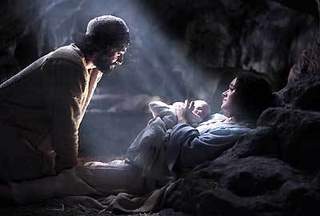
The Bible tells us that Jesus was not born by the seed of a man. This was prophesied several hundred years prior by Isaiah, who said, “the Lord himself will give you the sign. Look! The virgin will conceive a child! She will give birth to a son and will call him Immanuel (which means ‘God is with us’),” Isaiah 7:14. Luke and Matthew, in the New Testament, both attest that Mary was a virgin when she conceived Jesus (Luke 1, Matthew 1). Although there are those who will contest the virgin birth, is it so hard to believe that the God who created the heavens and the earth, and all that they contain, including man and woman, can cause a young girl to conceive a child without the seed of a man? In doing so, he becomes the paternal parent with all the rights of the one who begat. Jesus always referred to God as His Father, not Joseph (e.g. Luke 2:41-52, John 6:32, 40). But he also refers to Him as “the Father.” And when Jesus teaches his disciples to pray, He tells them to begin by saying, “Our Father, which art in heaven” (Matthew 6:9). So, although we recognize God as our heavenly Father, if we have been born into the Kingdom of God (See John 3: 3), we have not been begotten by the Father as Jesus has. We become children of God when we “receive him” (John 1:12), or believe and accept him, as the Messiah who takes away our sins. We shall never be a “begotten son” of God. That makes Jesus unique, and necessarily so, making Him the only one worthy of redeeming the world of its sin. He contains the seed of the Father along with the seed of the woman, making Him wholly God, and wholly human. So, although God makes it possible for us to be born of the Spirit of God (John 3), we are not physically conceived by the Spirit as Jesus was (Luke 1:35). Therefore, we are God’s children, nonetheless, but begotten in the flesh by our earthly fathers. And, truly, Jesus is the “only begotten” son of God, for nowhere else in history is it recorded that a man was conceived apart from the seed of a man and woman.
Categories: Messiah
 Beyond Traditon
Leave a comment